Every horse is different, which is why each appointment begins with a comprehensive equine veterinary physiotherapy assessment. This allows us to understand your horse’s movement, comfort, mobility and overall musculoskeletal health before creating an appropriate treatment or rehabilitation plan.
The assessment begins with a static observation while your horse is standing naturally. This allows us to assess posture, balance, weight distribution, muscle symmetry and any visible signs of tension, weakness or compensation.
A dynamic assessment will then be carried out to observe how your horse moves. This may include walking and trotting in a straight line, turning, backing up and moving on a circle where appropriate. Watching your horse in motion can help identify changes in gait, stiffness, reduced stride length, weakness, asymmetry or compensatory movement patterns.
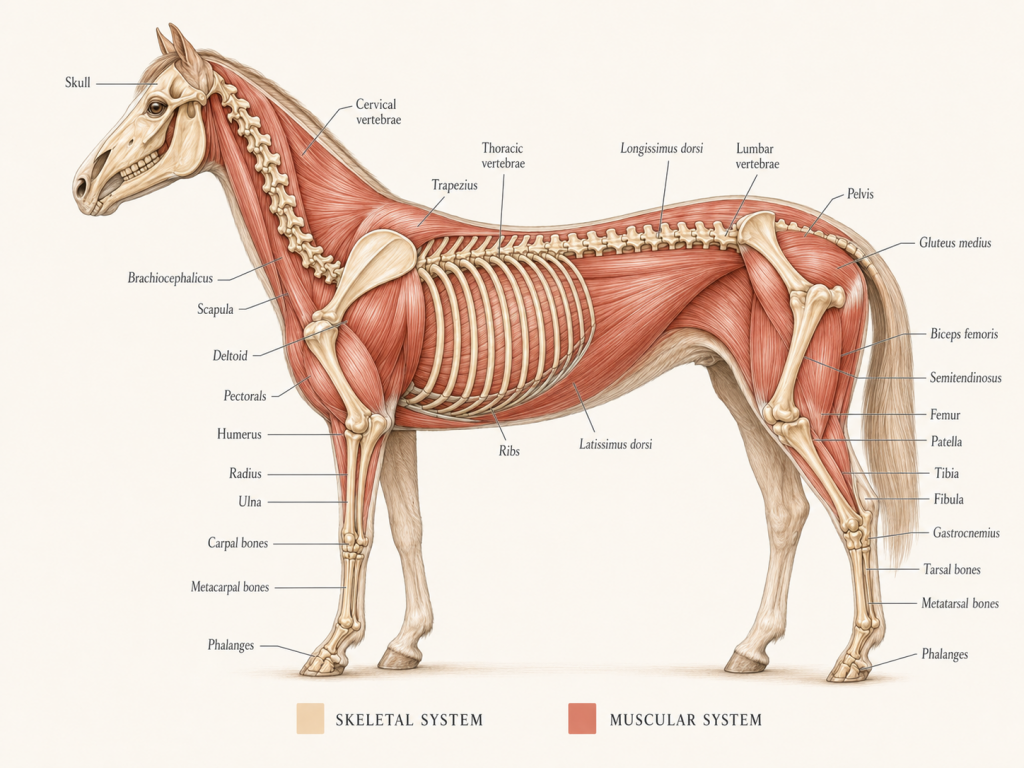
A thorough range of motion assessment will also be completed to evaluate the flexibility and movement of relevant joints. This is followed by careful palpation of the muscles, joints and surrounding soft tissues to identify areas of tightness, tenderness, heat, swelling, muscle loss or discomfort.
Where appropriate, the assessment may also consider your horse’s workload, discipline, previous injuries, medical history, saddle fit and any recent changes in performance or behaviour.
Throughout the assessment, your horse’s wellbeing will remain the priority. Their body language and behavioural indicators will be closely monitored for signs of pain, anxiety or discomfort. The assessment will always be adapted to suit your horse’s confidence, tolerance, age, fitness level and individual needs.
The findings from the assessment will help guide a personalised equine physiotherapy treatment and rehabilitation plan. This may support recovery after injury or surgery, improve mobility and flexibility, manage stiffness or discomfort, maintain strength and help your horse move as comfortably, freely and confidently as possible.